4 days ago
Pasadena, CA, USASenior
Base Salary
$143k - $176k/yr
Responsibilities
- Design, implement, test, and validate algorithms and ground-processing software for MWOW Level 3 ocean surface wind products.
- Develop machine-learning retrieval, correction, harmonization, uncertainty, quality-control, regridding, super-resolution, and gap-filling algorithms for satellite observations.
- Build collocation, simulation, and analysis tools to train and validate algorithms against buoy networks, ASCAT, and ERA-5 reanalysis.
- Deliver tested, documented, open-source Python software through GitHub using feature branches, pull requests, and code review.
- Collaborate with international partners and NASA science teams to develop, test, and deliver algorithms and software systems.
- Document algorithms in the MWOW Algorithm Theoretical Basis Document, support milestone reviews, and communicate results to stakeholders and the scientific community.
Requirements
- Bachelor’s degree in Electrical Engineering, Geophysics, Physics, Applied Mathematics, Computer Science, or a related discipline with at least 6 years of related experience; alternatively, a related master’s degree with 4 years or a related PhD with 2 years.
- Understanding of ocean microwave remote sensing, including scatterometry, synthetic aperture radar, radar altimetry, or passive microwave radiometry.
- Basic understanding of ocean surface winds and their relationship to atmospheric and oceanic processes.
- Demonstrated ability to develop, train, and validate machine-learning models for geophysical retrieval, regression, or image-to-image problems using TensorFlow or PyTorch.
- Strong Python skills, including NumPy, SciPy, xarray, and netCDF4, plus collaborative development with Git and GitHub.
- Experience analyzing large swath and gridded geophysical datasets.
- Strong communication and teamwork skills.
- Preferred qualifications include experience with deep-learning architectures, physics-constrained learned solvers, ocean-wind or sea-ice retrievals, open-source scientific software delivery, altimetry, NetCDF-4 metadata conventions, NASA DAAC publication, cloud or high-performance computing, and C++ or Fortran.
Benefits
- Health, dental, vision, wellbeing, and retirement plans.
- Paid time off, learning benefits, rideshare, childcare, flexible scheduling, and parental leave.
- Benefits-eligible employees receive benefits effective the first day of the month coincident with or immediately following their start date.
- Full-time role based in or associated with Pasadena, California; the stated typical annual hiring range is $142,792–$175,760.
About NASA JPL
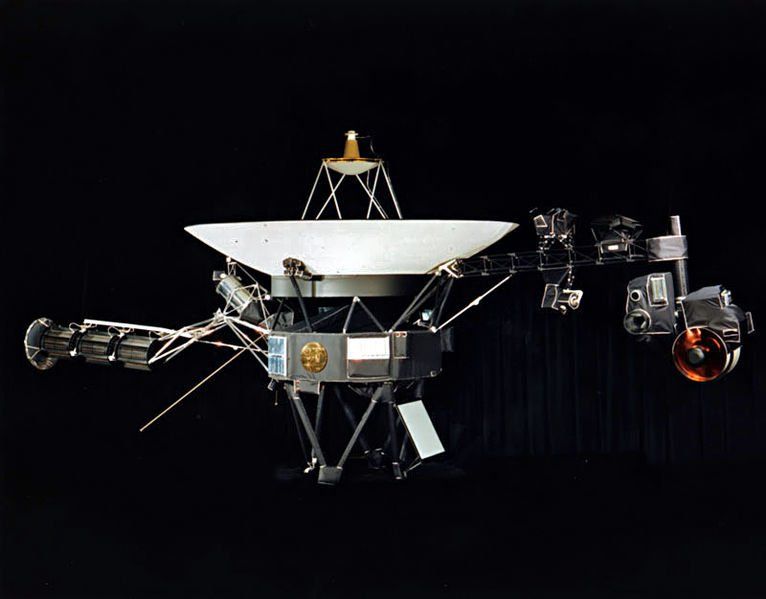
NASA’s Jet Propulsion Laboratory is a federally funded research and development center in Pasadena, CA, managed by Caltech. It designs, builds, and operates robotic spacecraft and science instruments for NASA, and develops ground systems like the Deep Space Network; notable missions include the Mars rovers and the Voyager probes. Founded in 1936, JPL is publicly funded and focuses on planetary, Earth, and astrophysics research and flight operations.